
TBLC History
TBLC’s Founder:
From Kalmykia to New Jersey
Geshe Ngwang Wangyal, a renowned Kalmyk-Mongolian guru who received his Buddhist training in Kalmykia and in Tibet, established TBLC in 1958 as the first Tibetan Buddhist dharma center in the United States. While he was to play a vital role in transplanting Tibetan Buddhism to American soil, his journey to American shores followed a long, circuitous route. Recognized in his teens for his sharp intellect and skill in debate, he was selected by his teacher, Lama Agvan Dorjiev, to travel from Kalmykia in Southeast Russia to distant Tibet for philosophical studies. At Drepung Gomang Monastery, he earned a reputation for fierce pursuit of Buddhist knowledge and generosity in supporting the poorer scholars. He achieved his Geshe degree from Drepung amidst many other adventures, including working as an editor of the Tibetan Buddhist canonical literature in Beijing, travelling to India for trade, and serving as a translator to Sir Charles Bell throughout his tours in China and Manchuria.
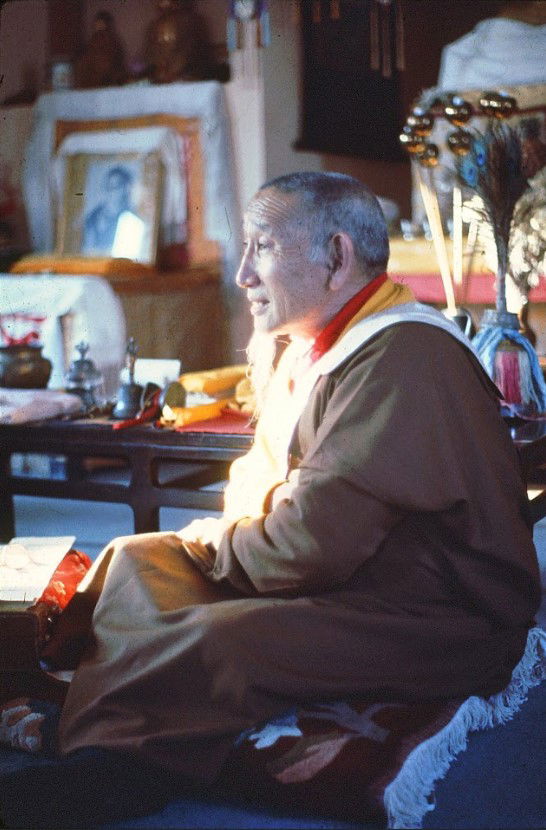
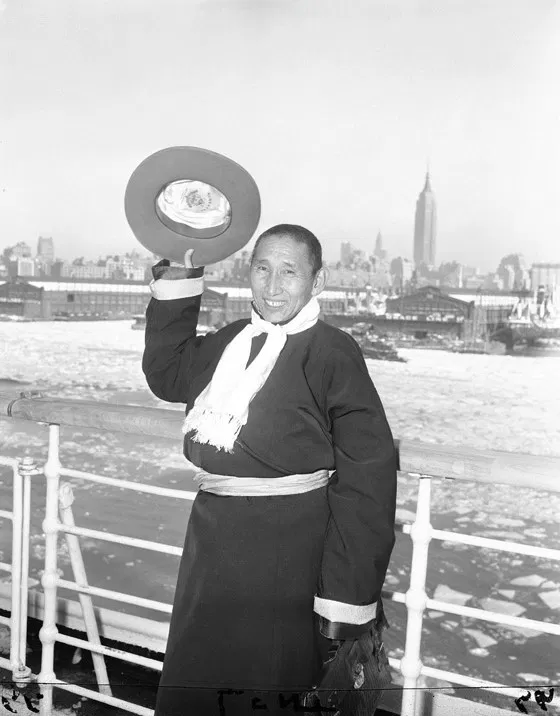
Chinese Communist incursions into Eastern Tibet in 1950 led Geshe-la to settle in Kalimpong, and it was from India that he was invited to the U.S. to serve as a priest for the Kalmyk-Mongolian community that had been established in Freewood Acres, New Jersey post World War II. With his unique combination of scholarly acumen, wealth of experience, and compassionate concern for others, he was able to found TBLC, first known as “Lamaist Buddhist Monastery of America,” as a wellspring for Tibetan Buddhist learning and practice. From his arrival to the U.S. in 1955, to his death in West Palm Beach, Florida in 1983, he devoted himself whole-heartedly and tirelessly to benefitting others with the Buddha’s teachings.
Kalmyk-American Roots and Tibetan Buddhist Studies
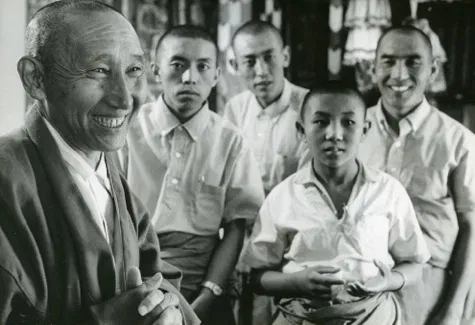
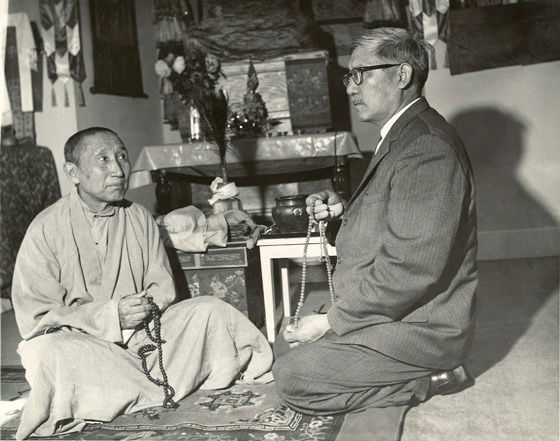
Arriving in Freehold in 1955, Geshe Wangyal responded to the needs of the Kalmyk-American community, as well as the Tibetan community of the greater New York area, by building a monastery in Howell Township with his own funds earned through teaching during his first years in this country. Beginning in 1962, he sponsored many Tibetan monastic scholars to come to the U.S. and to assist with monastery activities by giving teachings and performing religious ceremonies.
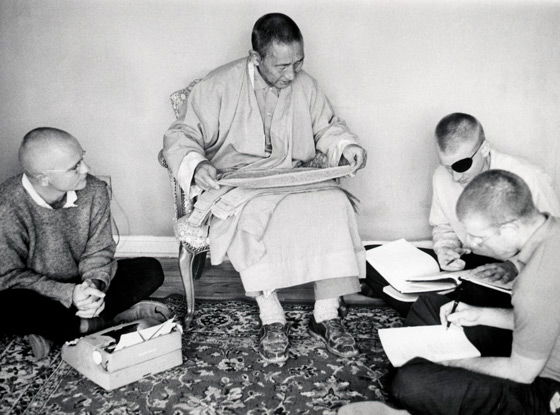
Geshe-la also took on resident American students, who tutored the monks in English language in exchange for classes in Tibetan Buddhism and Tibetan language. Two of them, Jeffrey Hopkins, Professor Emeritus of the University of Virginia, and Robert Thurman, Professor Emeritus of Columbia University, went on to become leading scholars with pioneering programs in the field of Tibetan Buddhist Studies, making Geshe Wangyal the grandfather of the academic study of Tibetan Buddhism.
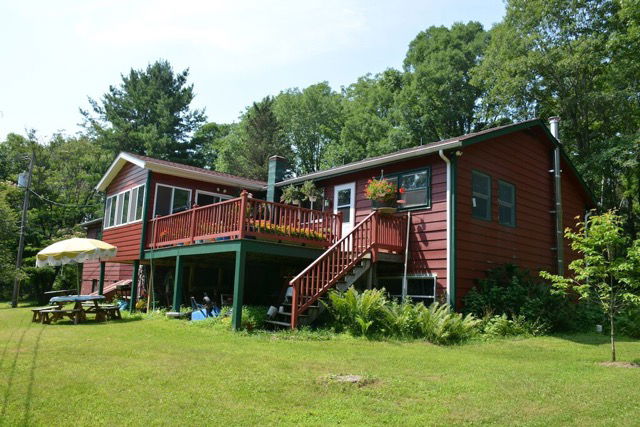
Geshe Wangyal’s “Retreat House”
During the 1960s, more American men and women came to study with Geshe-la and the Tibetan monks at the monastery. To adjust to this new situation and to accommodate his desire to enter into partial retirement, Geshe-la bought some land for a “retreat house” in Washington, New Jersey in 1967 and left the monastery in Howell in the care of the resident Tibetan monks. As an exceptionally innovative teacher, Geshe-la adapted life at this new center to meet the needs of his lay students, integrating Buddhist lay and monastic traditions and incorporating Kalmyk, Tibetan, and American cultural customs. Despite being in “retirement,” he worked alongside his students with ferocious energy to clear the land, build a School House, and create the facilities for engagement with the Buddhist tradition. Geshe-la’s love for such projects was only surpassed by his enthusiasm for conveying a basic knowledge of Buddhism to his students, and he continually stressed that studying the Teachings is the most important task for new Buddhists. Though he primarily taught in English, he encouraged many of his students to speak and read Tibetan language in order to deepen their understanding and also worked with them on numerous English translations of key Tibetan Buddhist texts. He inspired many of them to earn doctorates and contribute to academia, and encouraged others to contribute to the field of medicine. Through all of his activities, his retreat house in Washington became a center for Tibetan Buddhist learning.
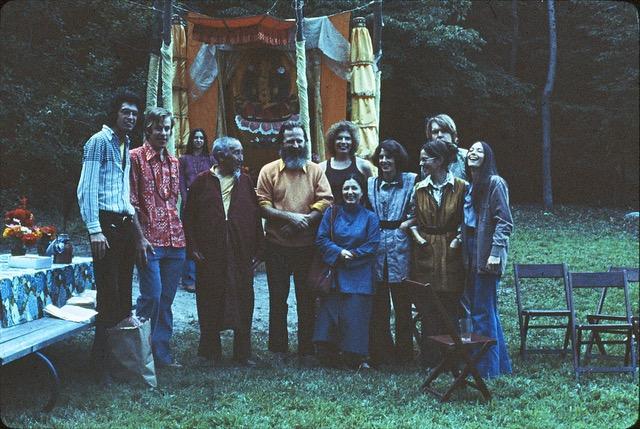
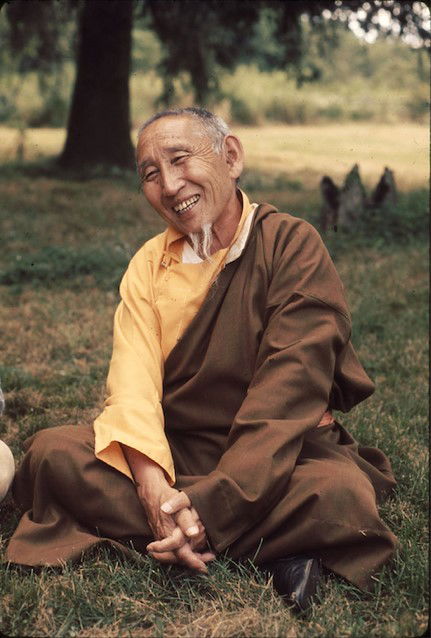
Geshe Wangyal’s love for such projects was only surpassed by his enthusiasm for conveying a basic knowledge of Buddhism to his students, and he continually stressed that studying the Teachings is the most important task for new Buddhists. Though he primarily taught in English, he encouraged many of his students to speak and read Tibetan language in order to deepen their understanding and also worked with them on numerous English translations of key Tibetan Buddhist texts. He inspired many of them to earn doctorates and contribute to academia, and encouraged others to contribute to the field of medicine. Through all of his activities, his retreat house in Washington became a center for Tibetan Buddhist learning.
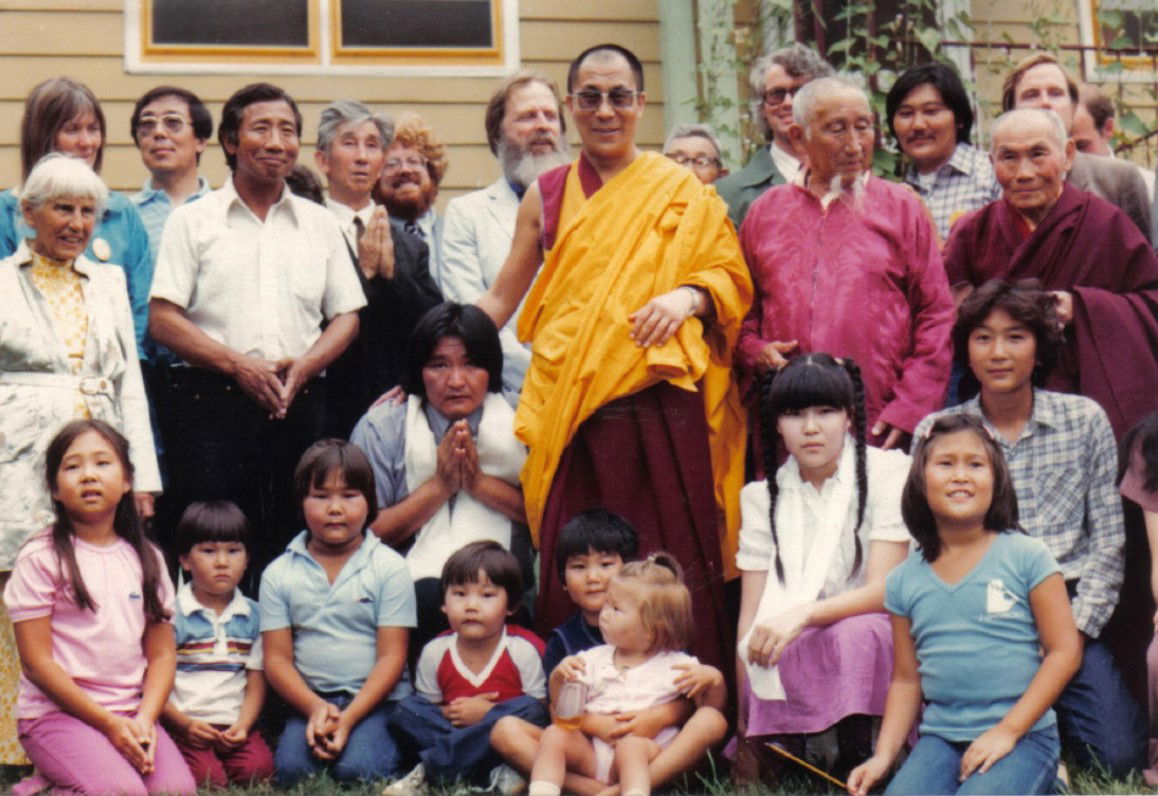
His Holiness the Dalai Lama’s First Visit to the U.S. and to TBLC in 1979.
Continuing a Legacy
The way of life and commitment to the Buddhist teachings that Geshe Wangyal established at TBLC has continued in the wake of his death in 1983. Shortly before his passing, Geshe-la arranged for the Tibetan monks from Southern Jersey to relocate to the Washington property and instructed his longtime students, Joshua and Diana Cutler, whom he named as his administrative successors, to build a temple in memory of his student and patron, Alice Scudder Rayburn. According to his vision, this temple would serve both as a gathering place for Americans to study and practice Buddhism and as a residence for His Holiness the Dalai Lama whenever he visited the United States. Geshe Wangyal had tremendous faith in His Holiness, and always regarded him as the spiritual head of TBLC. Beginning in 1979, he initiated a tradition of sponsoring His Holiness to give teachings at TBLC and this relationship continued, with His Holiness blessing TBLC with multiple further visits after Geshe-la’s passing. It was at His Holiness’ recommendation that the Center changed its name from the “Lamaist Buddhist Monastery of America” to the “Tibetan Buddhist Learning Center” in order to more clearly reflect that its main activity is to provide teachings on Tibetan Buddhism. His advice on methods for introducing Buddhism to Americans also informs TBLC’s curriculum. In keeping with His Holiness’ spiritual direction, and as custodians of Geshe Wangyal’s legacy, the Cutlers continue to maintain TBLC as a place for the study and practice of the Buddha’s teachings.